
Data traffic across global networks continues to surge, yet traditional telecom revenue growth remains largely stagnant. To navigate this structural shift, operators are increasingly moving away from legacy strategies. Adapting to the current market requires optimizing existing infrastructure, adopting leaner capital models, and securing data pathways.
From recent Global Telecom Outlook, here is a look at the core challenges shaping the next phase of telecom, and how TraxComm’s neutral wholesale backbone provides practical solutions.
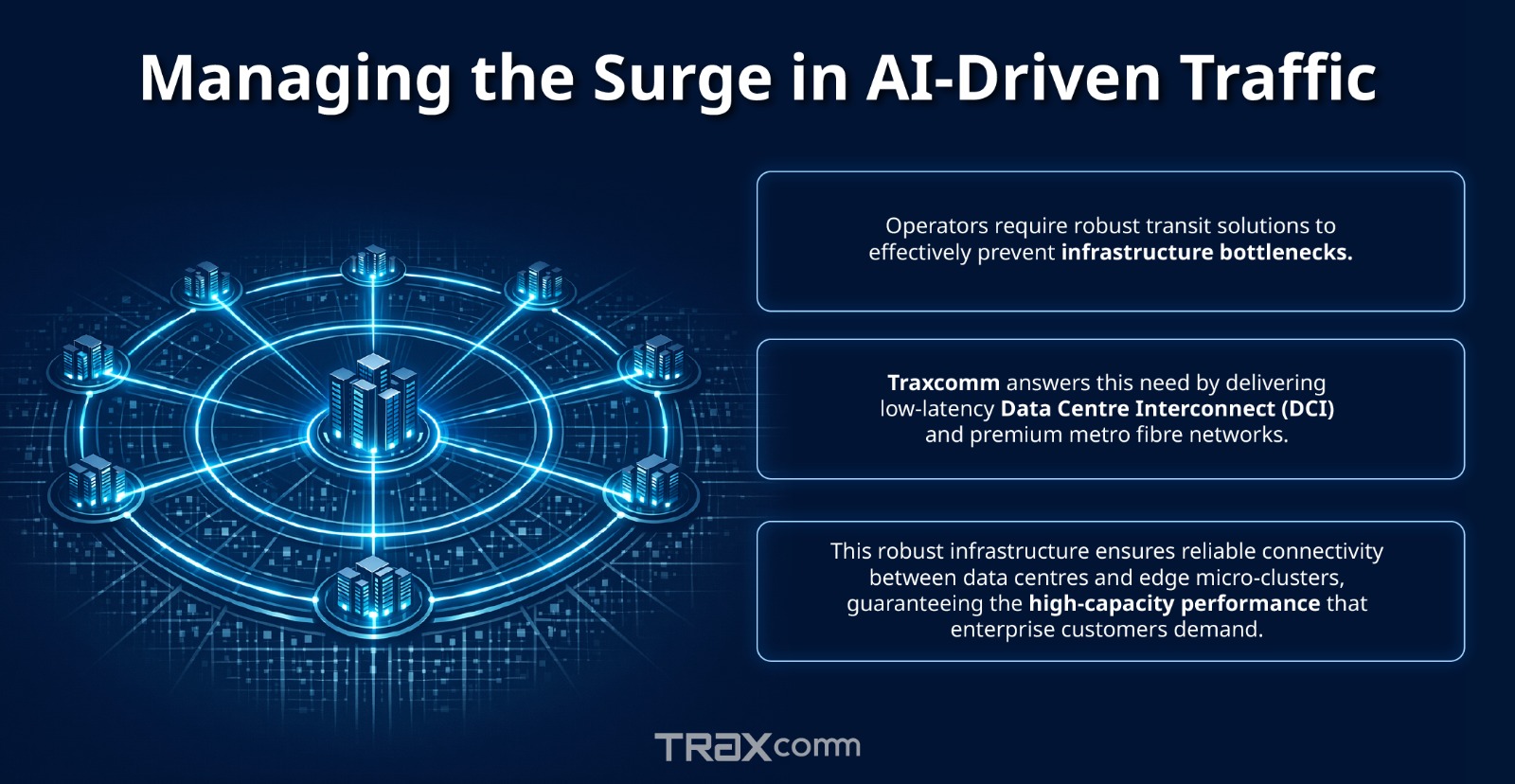
1. Managing the Surge in AI-Driven Traffic
The widespread adoption of AI is fundamentally altering network demands. The significant increase in east-west traffic, driven by AI model training and real-time inference, is actively straining traditional public networks.
- The TraxComm Advantage: To prevent infrastructure bottlenecks, operators need robust transit solutions. TraxComm addresses this by delivering low-latency Data Centre Interconnect (DCI) and premium metro fibre networks. This infrastructure ensures data centres and edge micro-clusters remain reliably connected, providing the high-capacity performance required by enterprise customers.
2. Shifting to Asset-Light Operations
Constructing physical networks from the ground up requires significant capital expenditure and long deployment timelines. With tighter margins across the industry, capex discipline is increasingly critical. Many operators are transitioning toward an “InfraCo*” model to maintain agility and reduce overhead.
- The TraxComm Advantage: TraxComm facilitates this shift by offering scalable, ready-to-use wholesale infrastructure. By utilizing an established, neutral network, service providers can avoid the costs and delays of physical builds. This approach frees up capital and internal resources, accelerating the deployment of new services to the market.
3. Ensuring Data Sovereignty and Security
Geopolitical fragmentation and stricter regulatory compliance have made data sovereignty a central requirement for enterprise operations. Clients now expect high network resilience and adherence to localized data standards.
- The TraxComm Advantage: TraxComm provides a highly secure connectivity layer routed directly through Hong Kong’s protected MTR railway corridors. This localized routing creates a physically secure, disruption-free network environment, enabling service providers to reliably meet the stringent data sovereignty and security requirements of their end-users.
As market dynamics evolve, partnering with a reliable, neutral infrastructure provider allows operators to navigate these changes efficiently. TraxComm provides the foundational connectivity needed to shift focus from network maintenance to core business growth and service delivery.
*InfraCo: Telecom infrastructure collaboration allows multiple network operators and technology providers to share physical assets—like towers, fiber cables, and spectrum—to reduce capital expenses and accelerate technology rollouts.